
Worldwide Gift Delivery Partners
Worldwide Gift Delivery Partners
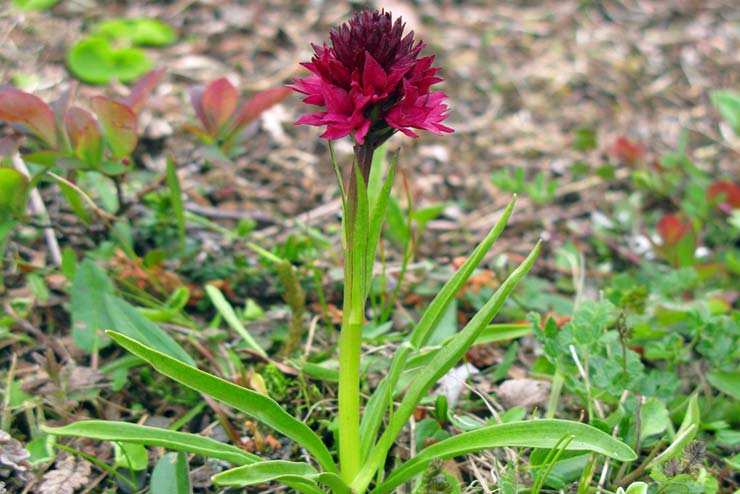
A very rare Swedish orchid with dense wine-red to deep pink flower spikes, restricted to a few calcareous mountain meadows around southern L...
| Scientific Name | Gymnadenia runei |
| Flower Color | Wine to red, deep pink to reddish to purple |
| Plant Height | Approximately 15 to 30 cm |
| Flower Size | Individual flowers about 8 to 15 mm |
| Flowering Time | June to July |
| Growing Time | Several years to flowering, slow natural establishment |
| Growing Location | Calcareous alpine/subalpine meadows around Tärnaby, southern Lapland |
| Sunlight | Full sun to light open shade |
| Temperature | Temperature for plant growing approx. 5 to 18°C and temperature for flower blooming approx. 10 to 18°C |
| Care Tips | Grow only from legally propagated material in alkaline, sharply drained, humus to poor soil. Provide cool conditions, strong light, moderate moisture and excellent drainage. Avoid fertilization, disturbance, transplantation and collection from wild populations. |
| Quick Summary | Brudkulla is one of Sweden's most unusual orchids, associated with a very small distribution in southern Lapland. Its compact flower head carries striking wine to red to deep pink flowers and rises above narrow green foliage. Swedish sources describe it as endemic to Sweden and occurring around the Tärnaby area, particularly in calcareous mountain meadows. Taxonomically, the plant has a complicated history: Kew currently accepts Gymnadenia × runei as a hybrid between G. conopsea and G. nigra, while Swedish conservation documentation uses Gymnadenia runei. It is therefore best presented in a commercial catalogue with a taxonomic note. Because Swedish orchids are legally protected, Brudkulla should be presented as a conservation or botanical flower, not as a cut to flower commodity. |
| Commercial & Gifting Uses | Suitable only as a botanical/conservation subject; never recommend wild to collected plants. |
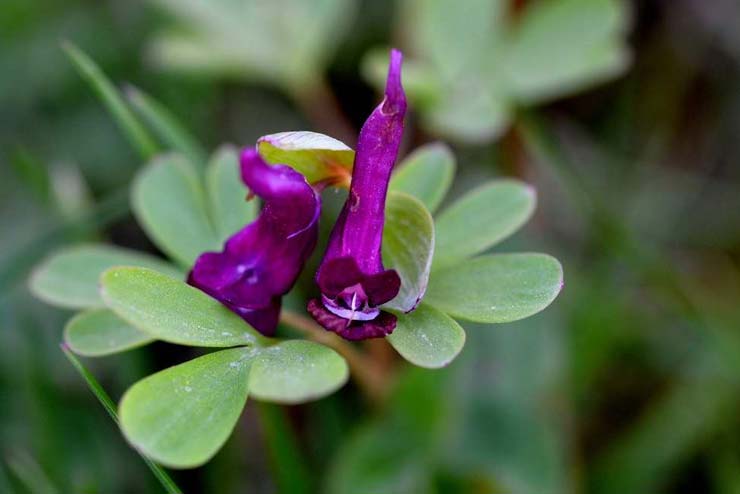
A highly localized Gotland endemic with delicate purple-pink flowers and finely divided foliage. It is a botanical rarity associated with li...
| Scientific Name | Corydalis gotlandica |
| Flower Color | Purple, pink to purple, occasionally pale violet |
| Plant Height | About 10 to 25 cm |
| Flower Size | About 15 to 25 mm |
| Flowering Time | April to May |
| Growing Time | Approximately 1 to 3 years under suitable cultivation |
| Growing Location | Limestone habitats on Gotland, Sweden |
| Sunlight | Partial shade to filtered sunlight |
| Temperature | Temperature for plant growing approx. 5 to 18°C and temperature for flower blooming approx. 8 to 16°C |
| Care Tips | Provide alkaline, rocky, well to drained soil with organic matter, partial shade and cool spring conditions. Keep evenly moist during growth but avoid winter waterlogging. Do not collect wild plants; use legally propagated stock. |
| Quick Summary | Gotland Corydalis is a particularly distinctive member of the poppy family, recognized for its restricted Swedish distribution and association with limestone landscapes. Its low to growing habit and purple to pink tubular flowers make it attractive to botanists and specialist gardeners, but its rarity means it should not be treated like an ordinary ornamental crop. The plant emerges during the cool spring season, taking advantage of available moisture before the summer landscape becomes drier. Its natural habitat is closely connected with Gotland's unusual calcareous environments. In a flower catalogue, its strongest appeal is therefore its rarity, Swedish identity and ecological significance rather than commercial availability. It works especially well in educational, botanical, conservation and heritage to themed presentations. |
| Commercial & Gifting Uses | Mainly botanical garden, conservation and specialist to plant interest. |
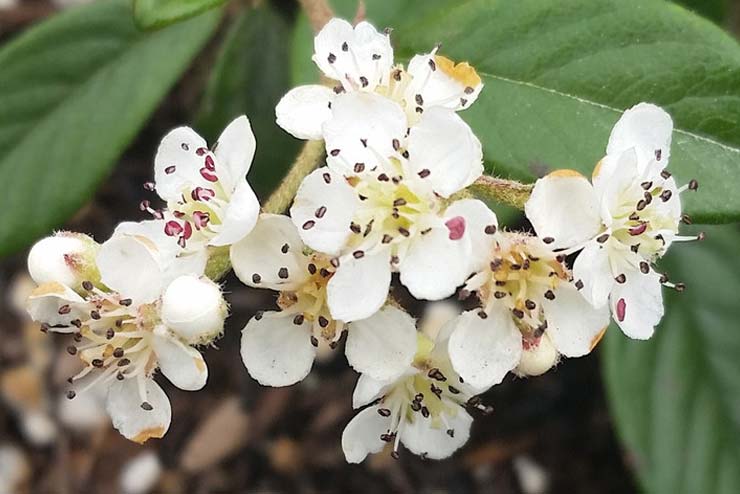
A rare Swedish cotoneaster associated with Kullaberg's limestone-rich landscape. It produces small pale flowers followed by decorative fruit...
| Scientific Name | Cotoneaster kullensis |
| Flower Color | White to pinkish to white |
| Plant Height | Approximately 0.5 to 1.5 m |
| Flower Size | About 5 to 8 mm |
| Flowering Time | May to June |
| Growing Time | 2 to 5 years to mature flowering |
| Growing Location | Kullaberg, Skåne, southern Sweden |
| Sunlight | Full sun to partial shade |
| Temperature | Temperature for plant growing and approx. 5 to 22°C and temperature for flower blooming approx. 10 to 20°C |
| Care Tips | Use alkaline, well to drained soil and full sun or light shade. Water during establishment but avoid saturated roots. Prune minimally after flowering. Preserve natural growth conditions and use only legally propagated plants. |
| Quick Summary | Kullaberg Cotoneaster is a rare woody plant associated with Kullaberg in Skåne. Unlike large to flowered ornamental shrubs, its flowers are small, understated and produced primarily for ecological reproduction rather than showy display. The species forms part of Kullaberg's exceptional flora, where limestone geology, coastal exposure and diverse woodland and grassland habitats create conditions for unusual plants. Swedish conservation documentation lists Cotoneaster kullensis as an endangered species within the Kullaberg Natura 2000 area. Its flowers are therefore best interpreted as part of a rare native shrub rather than a conventional bouquet flower. For commercial catalogues, its strongest applications are botanical education, ecological tourism, Swedish heritage products and conservation storytelling rather than cut flowers or mass to market gifting. |
| Quick Summary | Botanical and conservation significance. |
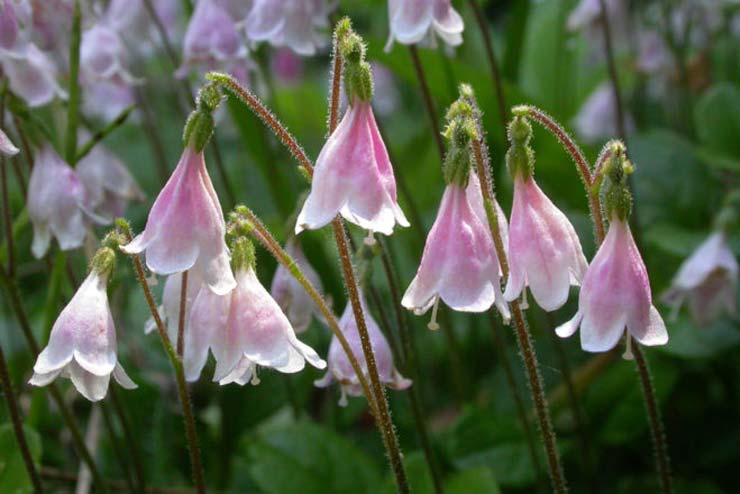
A fragrant woodland groundcover bearing paired, nodding pink-and-white bell-shaped flowers. Twinflower is strongly associated with boreal fo...
| Scientific Name | Linnaea borealis |
| Flower Color | Pink and white |
| Plant Height | 5 to 15 cm |
| Flower Size: | 8 to 15 mm |
| Flowering Time | June to July |
| Growing Time | 2 to 4 years to establish a substantial flowering patch |
| Growing Location | Cool boreal coniferous forests |
| Sunlight | Partial shade to dappled shade |
| Temperature | Temperature for plant growing approx. 5 to 20°C and temperature for flower blooming approx. 10 to 18°C |
| Care Tips | Provide acidic, humus to rich, well to drained woodland soil and cool partial shade. Keep moisture consistent without waterlogging. Avoid intense afternoon sun, heavy fertilizer and frequent disturbance. Allow the creeping stems to spread naturally. |
| Quick Summary | Twinflower is one of Sweden's most culturally recognizable woodland plants. Its slender stems carry pairs of wonderfully delicate, nodding flowers that combine pink tubes with pale interiors and a subtle fragrance. The plant forms low mats beneath conifers and other cool northern woodland vegetation. Its association with Carl Linnaeus gives it an additional cultural value, making it particularly suitable for Swedish heritage products, botanical illustrations, stationery, tourism merchandise and nature to themed gifts. It is not, however, a major commercial cut flower because the stems are delicate and the plant is naturally low to growing. Its greatest appeal is symbolic: it represents boreal forests, Swedish botanical history and Linnaeus himself. |
| Commercial & Gifting Uses | Limited specialist ornamental use; popular for Swedish botanical, Linnaeus to themed and heritage gifts, but not a major cut flower. |
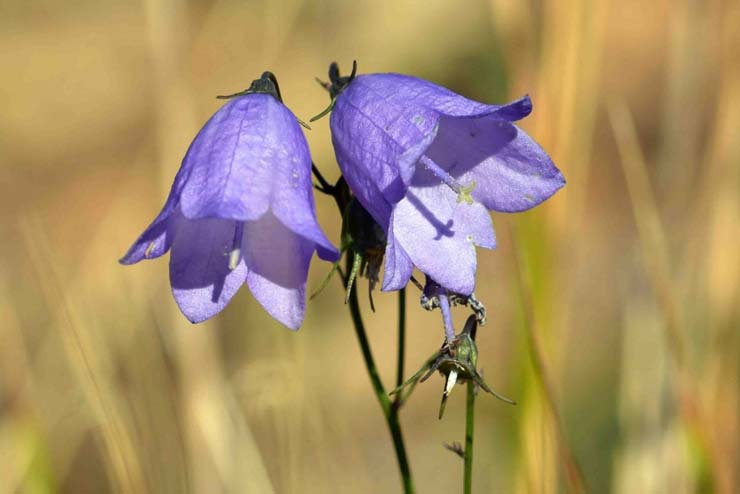
Sweden's national flower, the Harebell produces graceful blue-violet bells on slender stems and thrives in meadows, grasslands and open natu...
| Scientific Name | Campanula rotundifolia |
| Flower Color | Blue to blue to violet |
| Plant Height | 10 to 40 cm |
| Flower Size | 15 to 25 mm |
| Flowering Time | June to September |
| Growing Time | 1 to 2 years |
| Growing Location | Meadows, grasslands, rocky slopes and open woodland |
| Sunlight | Full sunlight to light shade |
| Temperature | Temperature for plant growing approx. 8 to 25°C and temperature for flower blooming approx. 12 to 22°C |
| Care Tips | Grow in full sun with moderately fertile, well to drained soil. Water during establishment, then avoid excessive moisture. Remove spent stems to extend flowering. Divide mature clumps carefully in spring or autumn for propagation. |
| Quick Summary | The Harebell is one of Sweden's most recognizable wildflowers and is widely appreciated for its airy blue to violet bells. Its slender stems give it an especially graceful appearance when growing among grasses, making it ideal for naturalistic gardens and Swedish to themed floral artwork. Unlike many rare species on this list, Campanula rotundifolia has a broad natural range extending across Europe and into the Russian Far East. It is therefore much more suitable for horticultural cultivation than the highly endemic species. The plant tolerates relatively dry conditions once established and performs well in rock gardens, meadow planting and informal borders. Its status as Sweden's national flower makes it particularly attractive for commercial gifting, souvenirs, printed products and Scandinavian floral branding. |
| Commercial & Gifting Uses | Swedish souvenirs, stationery, floral prints, national to themed gifts, garden plants and dried to flower designs. |
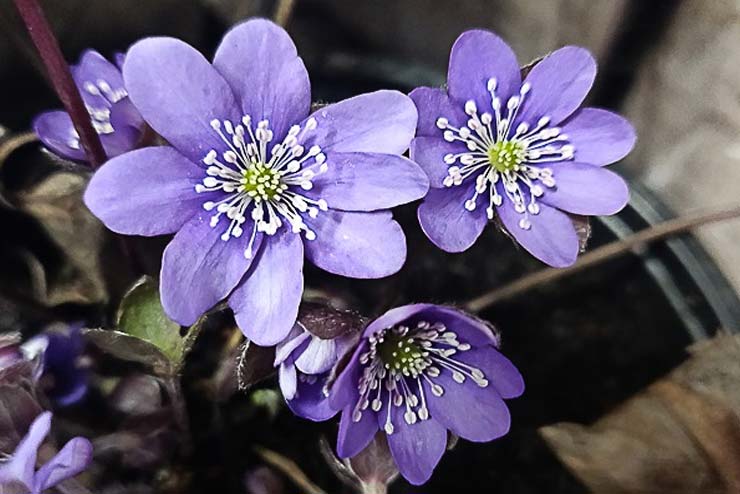
A brilliant early-spring woodland flower with vivid blue-violet petals that emerges soon after winter, often flowering before surrounding tr...
| Scientific Name | Hepatica nobilis |
| Flower Color | Blue, blue to violet, occasionally pink or white |
| Plant Height | 5 to 15 cm |
| Flower Size | 15 to 30 mm |
| Flowering Time | March to May |
| Growing Time | 2 to 3 years to establish |
| Growing Location | Deciduous woodland, woodland edges and calcareous soils |
| Sunlight | Partial shade; spring sunlight preferred |
| Temperature for plant growing approx. 5 to 20°C and temperature for flower blooming approx. 6 to 15°C | |
| Care Tips | Plant in humus to rich, well to drained soil beneath deciduous trees. Give bright spring light and summer shade. Maintain moderate moisture. Avoid disturbance once established because hepatica develops slowly and dislikes repeated transplantation. |
| Quick Summary | Blue Anemone is among the most striking signs of early spring in northern European woodlands. Its rich blue to violet flowers can appear while the surrounding forest floor is still covered with fallen leaves from the previous year. The plant is particularly attractive because its flowers emerge close to the ground before the developing tree canopy creates deep summer shade. It prefers humus to rich woodland soil and is especially successful where spring sunlight reaches the forest floor. Its vivid colour makes it popular with gardeners and photographers, although natural populations may receive legal protection in parts of Sweden. For commercial applications, cultivated plants, botanical art and spring to themed gifting are preferable to wild to collected flowers. |
| Commercial & Gifting Uses | Specialist garden plant, floral illustrations, spring gifts and botanical products. Wild collection should be avoided where protected. |
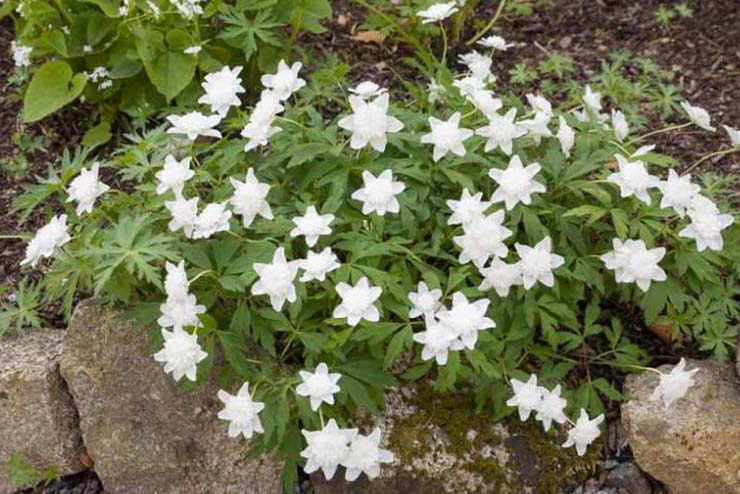
A classic Scandinavian spring woodland flower that forms spectacular carpets of white beneath beech, birch and other deciduous trees.
| Scientific Name | Anemone nemorosa |
| Flower Color | White, occasionally pinkish |
| Plant Height | 10 to 25 cm |
| Flower Size | 20 to 40 mm |
| Flowering Time | April to May |
| Growing Time | 2 to 4 years to establish colonies |
| Growing Location | Deciduous woodland, forest margins and shaded meadows |
| Sunlight | Partial shade to spring sun |
| Temperature | Temperature for plant growing approx. 5 to 20°C and temperature for flower blooming approx. 7 to 16°C |
| Care Tips | Plant rhizomes in humus to rich, moist but well to drained woodland soil. Provide spring sunlight and summer shade. Do not over to fertilize. Allow foliage to die back naturally after flowering so underground rhizomes can replenish energy. |
| Quick Summary | Wood Anemone is one of the defining flowers of European spring woodland. In Sweden it can cover large areas beneath deciduous trees, producing an impressive white floral carpet before the developing canopy becomes dense. Its seasonal strategy is highly adapted to woodland conditions: the plant flowers early, takes advantage of available spring light and then retreats underground as summer shade increases. It spreads gradually through underground rhizomes and can eventually create extensive colonies. Its flowers are attractive but relatively delicate, which limits its importance as a commercial cut flower. It is much more valuable for naturalistic gardens, woodland landscaping, photography, spring festivals and botanical to themed gifts. The species creates particularly memorable visual associations with Scandinavian forests. |
| Commercial & Gifting Uses | Limited cut to flower use; mainly garden, botanical photography, spring to themed gifts and naturalistic landscaping. |
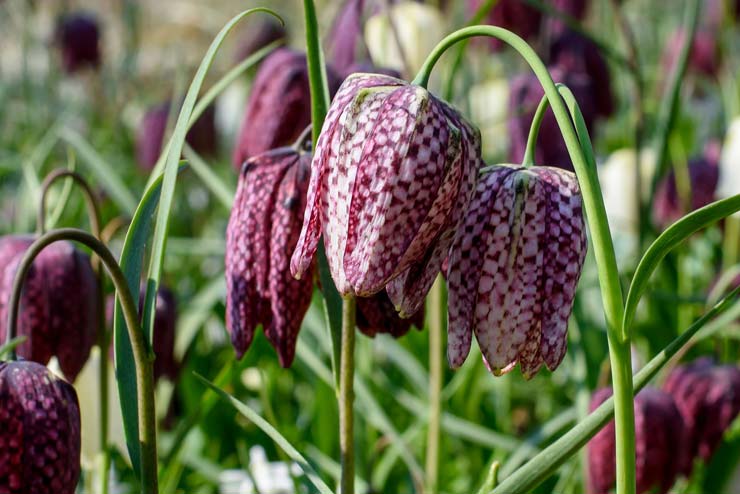
A distinctive nodding bell-shaped flower marked with a purple-and-white checkerboard pattern, traditionally associated with Swedish meadows ...
| Scientific Name | Fritillaria meleagris |
| Flower Color | Purple, maroon, pinkish to purple and white |
| Plant Height | 20 to 40 cm |
| Flower Size | 30 to 50 mm |
| Flowering Time | April to May |
| Growing Time | 2 to 3 years from bulb to strong flowering |
| Growing Location | Moist meadows and naturalized grasslands |
| Sunlight | Full sun to light shade |
| Temperature | Temperature for plant growing approx. 5 to 20°C and temperature for flower blooming approx. 8 to 16°C |
| Care Tips | Plant bulbs in moisture to retentive but well to drained soil with good spring light. Do not allow bulbs to dry completely. Avoid heavy fertilizer. Let foliage yellow naturally after flowering to restore energy for next season. |
| Quick Summary | Snake's Head Fritillary is among Europe's most distinctive bulb flowers. Its nodding, bell to shaped blooms are instantly recognizable because of their unusual checkerboard markings, usually in rich purple, maroon, pink and white tones. The flowers rise from narrow grass to like foliage during spring and are particularly attractive when naturalized through damp meadows. In Sweden it is closely associated with Uppland, where the Swedish name Kungsängslilja reflects its cultural importance. Unlike many rare endemic plants on this list, Fritillaria meleagris is a genuine horticultural subject and can be propagated and sold as cultivated bulbs. Its unusual pattern gives it strong potential for spring bouquets, premium garden products, floral photography, greeting cards and sophisticated gifting collections. |
| Commercial & Gifting Uses | High ornamental and gifting potential as bulbs and cultivated flowers; excellent for spring arrangements, gardens and decorative products. |
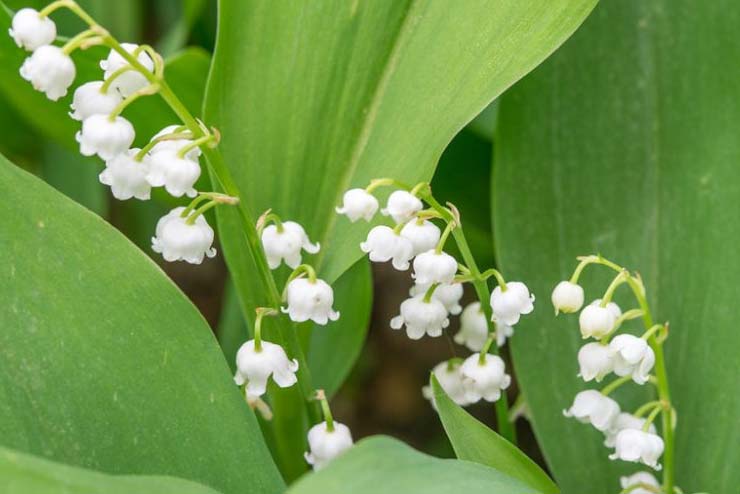
A highly fragrant woodland flower with elegant white bells, celebrated in Sweden as the provincial flower of Gästrikland and widely valued f...
| Scientific Name | Convallaria majalis |
| Flower Color | White; rarely pink |
| Plant Height | 15 to 30 cm |
| Flower Size | 5 to 10 mm |
| Flowering Time | May to June |
| Growing Time | 2 to 5 years to mature flowering colonies |
| Growing Location | Woodland, forest margins and humus to rich soils |
| Sunlight | Partial to full shade |
| Temperature | Temperature for plant growing approx. 5 to 22°C and temperature for flower blooming approx. 10 to 18°C |
| Care Tips | Grow in humus to rich, moist soil under partial or full shade. Keep roots cool and evenly moist. Allow colonies to spread naturally. Remember that every part is poisonous and local Swedish collection restrictions apply. |
| Quick Summary | Lily of the Valley is one of Europe's most recognizable fragrant woodland flowers. Its arching stems carry small white bells that release a powerful, sweet fragrance, making the plant exceptionally valuable in perfumery and spring to themed gifting. In Sweden it is associated with Gästrikland and grows widely outside the mountain regions. Cultivated forms are also valued for gardens and seasonal floral products. However, its commercial status requires care in Sweden: the plant is protected in several counties, and collection for sale or commercial purposes is prohibited in specified areas. The entire plant is poisonous if consumed. Consequently, commercial products should rely on legally cultivated material and should not imply that wild Swedish plants are available for harvesting. |
| Commercial & Gifting Uses | Used in fragrance, perfumery, cultivated plants, wedding themes and spring floral products. Restrictions apply in parts of Sweden. |
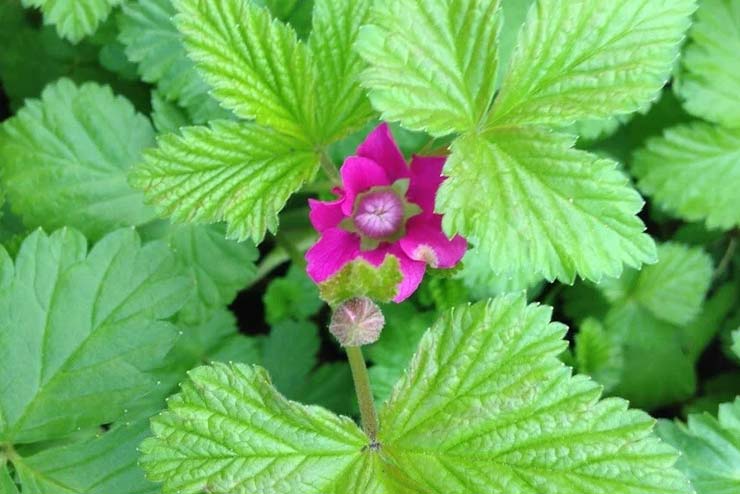
A low northern bramble with beautiful dark-pink flowers that later produces the intensely aromatic Arctic bramble berry, prized especially i...
| Scientific Name | Rubus arcticus |
| Flower Color | Dark pink, rose to red to magenta |
| Plant Height | 10 to 30 cm |
| Flower Size | 15 to 25 mm |
| Flowering Time | June to July |
| Growing Time | 2 to 3 years to fruiting maturity |
| Growing Location | Moist northern meadows, forest margins, ditches and wet woodland |
| Sunlight | Full sun to partial shade |
| Temperature | Temperature for plant growing approx. 5 to 20°C and temperature for flower blooming approx. 10 to 18°C |
| Care Tips | Provide cool, moist, acidic to to to neutral, organic to rich soil with good drainage. Give sun or partial shade. Keep evenly watered during flowering and fruiting. Use compatible cultivars for reliable fruit production and avoid hot conditions. |
| Quick Summary | Arctic Bramble is a low to growing northern perennial valued more for its extraordinary fruit than for its flowers. The flowers are nevertheless exceptionally attractive, appearing in shades of dark pink, rose to red or magenta during early summer. After pollination they develop into intensely aromatic dark to red berries that have a long culinary tradition in northern Scandinavia. In Sweden the plant is particularly associated with northern regions and is the landscape flower of Norrbotten. Commercial cultivation exists mainly through selected forms and hybrids rather than large to scale production of wild plants. The berry is used in preserves and specialty food products, while the flower itself has limited commercial importance. Its combination of attractive flowers, cultural identity and premium fruit makes it suitable for specialty gifting. |
| Commercial & Gifting Uses | Commercial value is mainly in the fruit, including preserves and specialty foods; flowers have niche botanical and gifting appeal. |
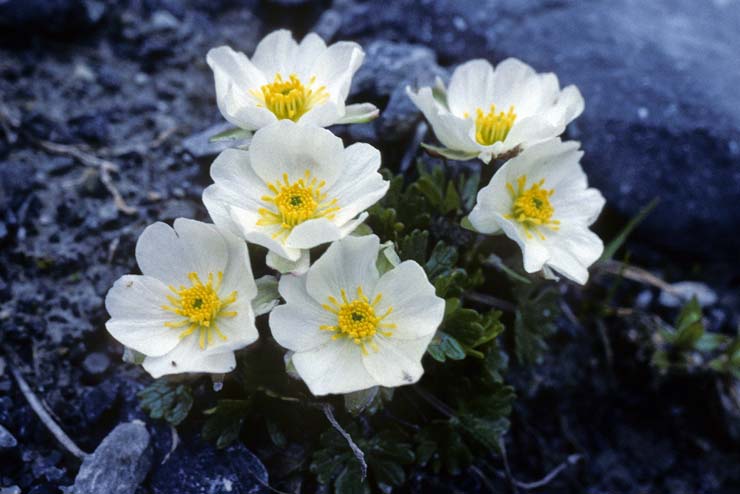
A remarkable high-altitude buttercup that flowers beside melting snowfields, producing white flowers that can turn pink or reddish as they a...
| Scientific Name | Ranunculus glacialis |
| Flower Color | White, later pink to reddish |
| Plant Height | 5 to 20 cm |
| Flower Size | 18 to 38 mm |
| Flowering Time | July to August |
| Growing Time | Several years; slow alpine perennial |
| Growing Location | High Scandinavian mountains, snowbeds and rocky alpine ground |
| Sunlight | Full sunlight |
| Temperature for plant growing approx. 0 to 15°C and temperature for flower blooming approx. 5 to 12°C | |
| Care Tips | Provide very cool conditions, gritty mineral soil, excellent drainage and reliable moisture. Protect from heat and stagnant water. Give full sunlight. Alpine cultivation requires careful temperature management and should never involve wild collection. |
| Quick Summary | Glacier Buttercup is an extraordinary example of plant adaptation to extreme alpine environments. It survives close to persistent snow patches where the growing season is short, temperatures remain low and exposed ground experiences severe weather. Its flowers initially appear white, sometimes changing through pink to reddish tones as they age. The species is native across a broad Arctic to alpine range that includes Sweden, Norway, Iceland, Greenland and high European mountains. In Sweden it occurs in the high mountain environment, where it takes advantage of snowmelt moisture. It has virtually no conventional cut to flower market because its ecological requirements are difficult to reproduce commercially. Its primary value is scientific, botanical and educational, representing the remarkable flora of Scandinavian high mountains. |
| Commercial & Gifting Uses | No mainstream commercial use. Botanical, alpine to garden and conservation interest. |
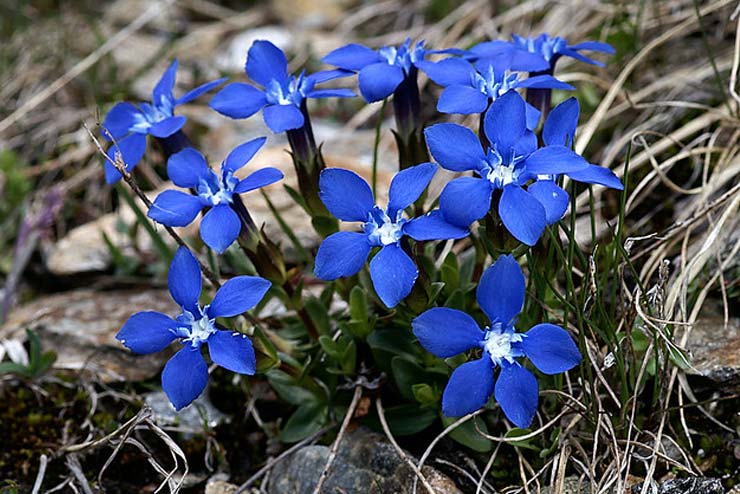
A tiny alpine gentian with intensely vivid blue flowers that open widely in sunshine, creating striking colour against rocky mountain vegeta...
| Scientific Name | Gentiana nivalis |
| Flower Color | Brilliant blue |
| Plant Height | 5 to 15 cm |
| Flower Size | 10 to 20 mm |
| Flowering Time | July to August |
| Growing Time | Usually 1 to 2 seasons for annual/biennial plants |
| Growing Location | Alpine grasslands, limestone to rich mountain slopes and rocky ledges |
| Sunlight | Full sunlight |
| Temperature | Temperature for plant growing approx. 2 to 15°C and temperature for flower blooming approx. 8 to 15°C |
| Care Tips | Use gritty, alkaline, sharply drained soil and abundant sunlight. Keep roots cool and moisture moderate. Avoid rich fertilizer and heat. Protect young plants from competition, especially in warm lowland growing conditions. |
| Quick Summary | Alpine Gentian is a small but spectacular mountain flower. Its vivid blue petals are especially striking because the plant itself is tiny and grows close to the ground. The flowers respond strongly to sunlight and may remain closed during cloudy or cool conditions. In Swedish mountains it is associated with calcareous grasslands, Dryas moors, rocky ledges and other open alpine habitats. Its short stature is an adaptation to exposed mountain conditions, where low temperatures and strong winds make tall growth difficult. Although the flower has considerable visual appeal, it is not an important commercial cut flower. Its main value lies in alpine gardening, botanical collections, photography, scientific education and premium nature to themed imagery. |
| Commercial & Gifting Uses | No major cut to flower trade. Suitable for alpine botanical gardens, photography and nature to themed products. |
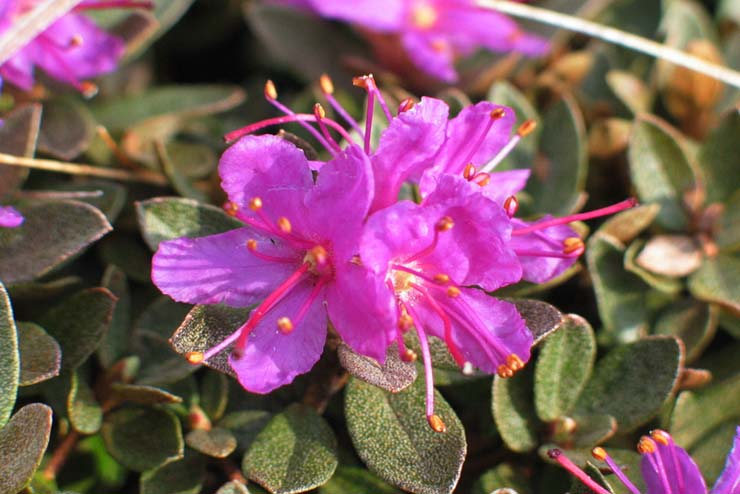
A miniature Arctic rhododendron with leathery evergreen foliage and clusters of brilliant reddish-violet flowers, adapted to cold, exposed S...
| Scientific Name | Rhododendron lapponicum |
| Flower Color | Reddish to violet, purple to pink |
| Plant Height | Usually 4 to 10 cm |
| Flower Size | 15 to 25 mm |
| Flowering Time | May to June |
| Growing Time: | 2 to 5 years to establish |
| Growing Location | Calcareous alpine moors and Dryas rich mountain habitats |
| Sunlight | Full sunlight to light shade |
| Temperature | Temperature for plant growing approx. 0 to 15°C and temperature for flower blooming approx. 5 to 15°C |
| Care Tips | Provide acidic to to to calcareous mineral conditions according to provenance, excellent drainage and cool temperatures. Protect from overheating. Maintain moderate moisture. Give good light but shelter from drying winds. Avoid heavy feeding and poorly drained soil. |
| Quick Summary | Lapland Rosebay is an exceptionally small member of the rhododendron family, often growing only a few centimetres above the mountain surface. Despite its miniature size, its reddish to violet flowers create an intense burst of colour against mosses, lichens and rocky ground. In Swedish Lapland it is particularly associated with calcareous Dryas moors and high mountain environments. Its evergreen leaves help it survive the long Arctic winter, while its low growth minimizes exposure to severe winds. It is a specialist botanical plant rather than a conventional bouquet flower. Its strongest commercial potential is in alpine gardening, botanical collections, educational displays and nature to themed imagery. Swedish mountain flora guides specifically note its low stature and June flowering period. |
| Commercial & Gifting Uses | Specialist alpine garden plant, limited commercial value compared with mainstream rhododendrons. |
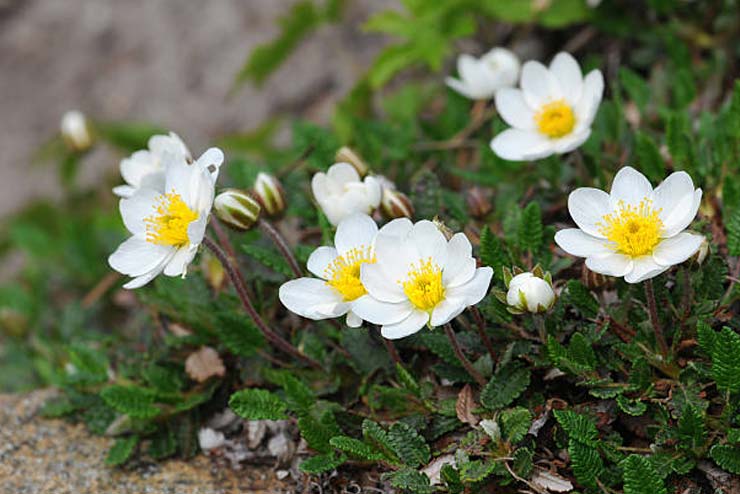
A tough, low-growing alpine plant with elegant white flowers and golden centres, thriving in lime-rich rocky ground and forming characterist...
| Scientific Name | Dryas octopetala |
| Flower Color | White |
| Plant Height | 5 to 15 cm |
| Flower Size | 20 to 40 mm |
| Flowering Time | June to July |
| Growing Time | 2 to 4 years |
| Growing Location | Calcareous alpine slopes, Dryas moors and rocky mountain ground |
| Sunlight | Full sunlight |
| Temperature | Temperature for plant Growing approx. 0 to 18°C and temperature for flower blooming approx. 8 to 16°C |
| Care Tips | Plant in alkaline, gritty, sharply drained soil under full sun. Keep roots cool and avoid excessive winter wetness. Water during establishment, then allow natural drying between watering. Avoid rich fertilizer and competition. |
| Quick Summary | Mountain Avens is a characteristic plant of northern alpine landscapes and one of the species that defines lime to rich Dryas moor vegetation. Its low woody stems, leathery leaves and white flowers allow it to withstand strong winds, cold temperatures and nutrient to poor rocky soils. The flowers are relatively large compared with the plant and have a bright yellow centre, giving them considerable ornamental appeal despite their small stature. In Swedish Lapland, extensive communities of Mountain Avens occur in calcareous mountain terrain and support a diverse collection of other alpine plants. It is better suited to specialist rock and alpine gardens than cut to flower production. Its visual identity is particularly useful for Scandinavian nature products and mountain to themed botanical designs. |
| Commercial & Gifting Uses | Alpine garden, rock garden and botanical uses; not a major cut flower. |
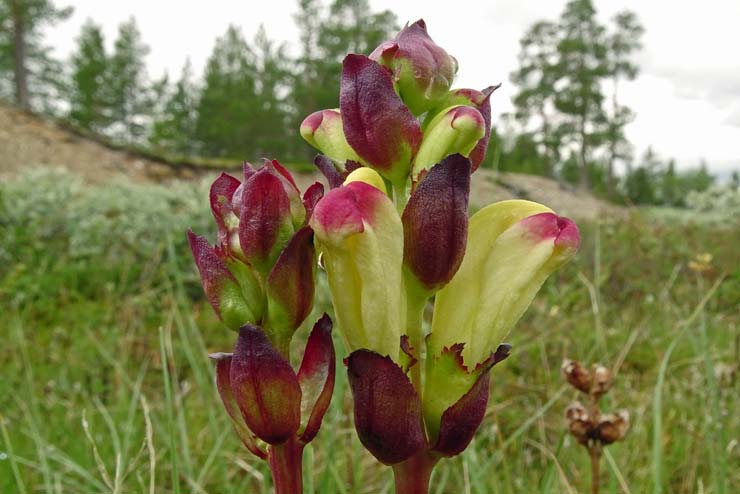
A dramatic wetland perennial with tall spikes of pale yellow flowers marked with purple-pink tips, giving it a distinctive scepter-like appe...
| Scientific Name | Pedicularis sceptrum to carolinum |
| Flower Color | Yellow, cream and pink to purple |
| Plant Height | 30 to 100 cm |
| Flower Size | 25 to 38 mm |
| Flowering Time | June to August |
| Growing Time | 2 to 3 years to mature flowering |
| Growing Location | Wet meadows, fens, marshes and peat to rich habitats |
| Sunlight | Full sunlight to partial shade |
| Temperature | Temperature for plant growing approx. 5 to 20°C and temperature for flower blooming approx. 10 to 18°C |
| Care Tips | Provide consistently moist, nutrient to moderate soil and cool conditions. Give sun or light shade. Avoid drying the root zone. Because the species is hemiparasitic, cultivation is more successful with compatible host vegetation nearby. |
| Quick Summary | King Charles's Scepter is one of the most architecturally striking flowers in northern European wetlands. Its tall upright flowering spike resembles a ceremonial scepter, while pale yellow tubular flowers carry contrasting pink or purple markings. The plant belongs to Pedicularis, a group containing hemiparasitic species that obtain some nutrients through connections with neighbouring plants. It is associated with wet meadows, fens and other moisture to rich habitats and has a broad subarctic/subalpine Eurasian distribution that includes Sweden. Its unusual shape gives it considerable botanical and photographic interest, but it is not a conventional cut flower and is rarely encountered in commercial floral design. It is better suited to specialist collections, wetland interpretation, botanical gardens and Scandinavian heritage imagery. |
| Commercial & Gifting Uses | Limited specialist botanical or ornamental interest, not a mainstream commercial flower. |
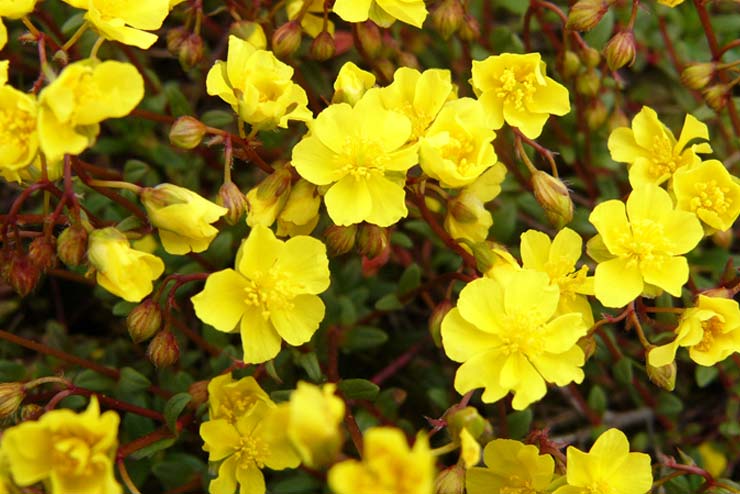
A low-growing yellow rockrose adapted to Öland's dry limestone Alvar, where its bright flowers can colour large areas during the early summe...
| Scientific Name | Helianthemum oelandicum |
| Flower Color | Bright yellow |
| Plant Height | 5 to 20 cm |
| Flower Size | 15 to 25 mm |
| Flowering Time | June, with some forms flowering later |
| Growing Time | 1 to 3 years |
| Growing Location | Öland's Great Alvar and other calcareous open habitats |
| Sunlight | Full sunlight |
| Temperature | Temperature for plant growing approx. 8 to 25°C and temperature for flower blooming approx. 15 to 25°C |
| Care Tips | Use very well drained alkaline or calcareous soil in full sun. Allow seasonal dryness after flowering. Avoid rich soil and frequent watering. Maintain open growing conditions because surrounding vigorous plants can quickly overwhelm this low shrub. |
| Quick Summary | Öland Sun rose is one of the characteristic plants of Öland's Great Alvar. It is a low woody shrub that spreads across shallow limestone soils and produces bright yellow flowers during the early summer. The species is remarkably adapted to an environment where drought, frost and seasonal waterlogging occur within the same annual cycle. The true Öland form is especially significant because it is restricted to Öland and is considered a glacial relict. Its flowers are showy enough for rock gardens, but its strongest commercial potential is cultural rather than floral. It is highly suitable for Öland tourism branding, Swedish botanical artwork, conservation education, postcards and nature themed gifts. |
| Commercial & Gifting Uses | Good specialist rock to garden potential, plus Öland to themed tourism, botanical prints and heritage gifts; not a standard cut flower. |
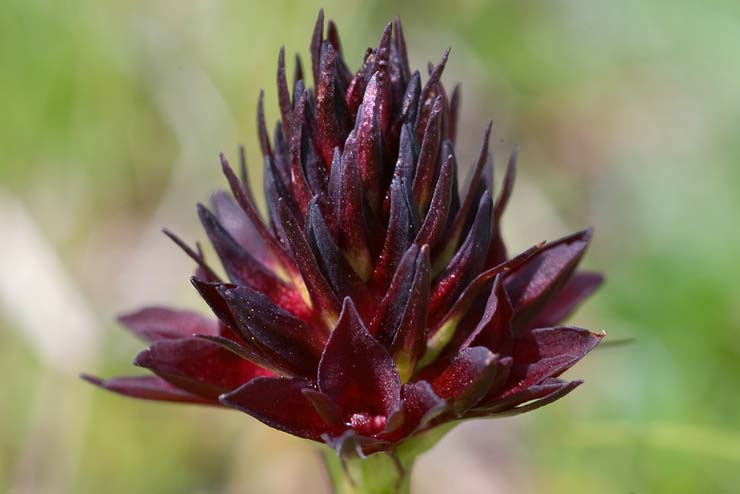
A rare dark maroon-to-blackish orchid with a powerful vanilla-like fragrance, growing in calcareous Swedish grasslands and flowering in earl...
| Scientific Name | Gymnadenia nigra |
| Flower Color | Dark maroon, reddish to black, deep purple |
| Plant Height | Up to about 20 to 25 cm |
| Flower Size | Individual flowers approximately 8 to 15 mm |
| Flowering Time | May to June |
| Growing Time | Several years; difficult specialist cultivation |
| Growing Location | Calcareous grasslands and traditional hay meadows in northern Sweden |
| Sunlight | Full sunlight |
| Temperature | Temperature for plant growing approx. 5 to 18°C and temperature for flower blooming approx. 10 to 18°C |
| Care Tips | Use only legally propagated material. Provide cool, bright conditions, alkaline well drained soil and low fertility. Avoid disturbance and over watering. Never collect wild plants. Maintain natural meadow conditions where possible and monitor local conservation regulations. |
| Quick Summary | Black Vanilla Orchid is one of Sweden's most unusual orchids, combining a dark flower colour with an intense fragrance reminiscent of vanilla. The dense flower spike can appear almost black or chocolate to maroon from a distance, although individual flowers are reddish to purple. In Sweden the species is extremely rare and occurs in a limited number of inland locations, particularly in calcareous grasslands and traditional hay meadows. It is protected throughout Sweden, and wild specimens may not legally be picked, dug up or damaged. Consequently, it should never be marketed as a wild to harvested commercial flower. Its strongest legitimate commercial applications are specialist cultivated orchid collections, botanical education, photography and conservation to themed gifting. |
| Commercial & Gifting Uses | No wild commercial use. Legally propagated plants may have specialist botanical value; not a normal cut flower. |
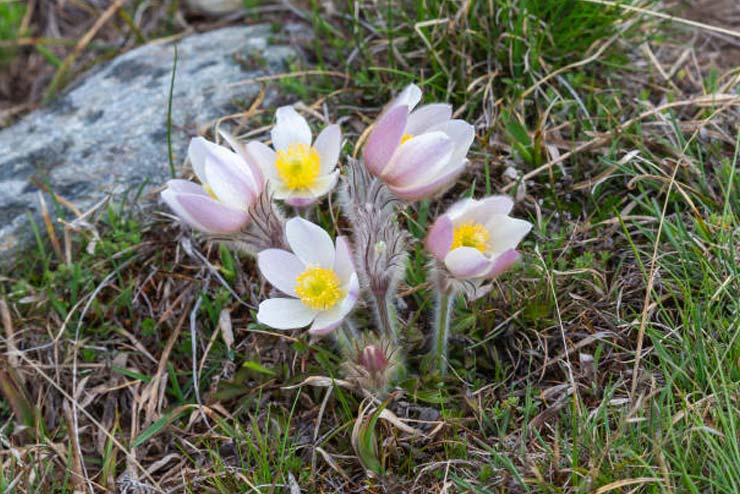
A distinctive early alpine flower with silky, hairy foliage and white flowers often flushed with pink or purple, capable of blooming while s...
| Scientific Name | Pulsatilla vernalis |
| Flower Color | White with pink to purple exterior |
| Plant Height | 5 to 20 cm |
| Flower Size | 30 to 50 mm |
| Flowering Time | April to June |
| Growing Time | 2 to 4 years |
| Growing Location | Dry, open, sandy or rocky northern habitats and alpine heaths |
| Sunlight | Full sunlight |
| Temperature | Temperature for plant growing approx. 0 to 18°C and temperature for flower blooming approx. 3 to 15°C |
| Care Tips | Plant in sharply drained sandy or gritty soil with full sun. Avoid waterlogged conditions. Keep roots cool and avoid excessive fertilizer. Provide winter drainage and allow the plant to remain undisturbed after flowering. |
| Quick Summary | Spring Pasqueflower is a remarkable northern perennial adapted to begin flowering exceptionally early in the year. Its stems and buds are covered in fine hairs, providing protection against cold temperatures, while the flowers open close to the ground as snow retreats. The flowers are generally white inside with pink or purplish tones on the outer surfaces. The plant prefers open, dry and well to drained habitats where competing vegetation remains limited. Its ability to bloom during the transition from winter to spring gives it considerable symbolic value as a flower of renewal and resilience. It is better suited to specialist alpine gardens, botanical collections, photography and Scandinavian spring to themed products than commercial cut to flower production. |
| Commercial & Gifting Uses | Specialist rock to garden and alpine plant; suitable for botanical imagery and spring to themed products, but not a mainstream cut flower. |